The Board Chair Who Killed the Meeting to Save the Room
%201.avif)

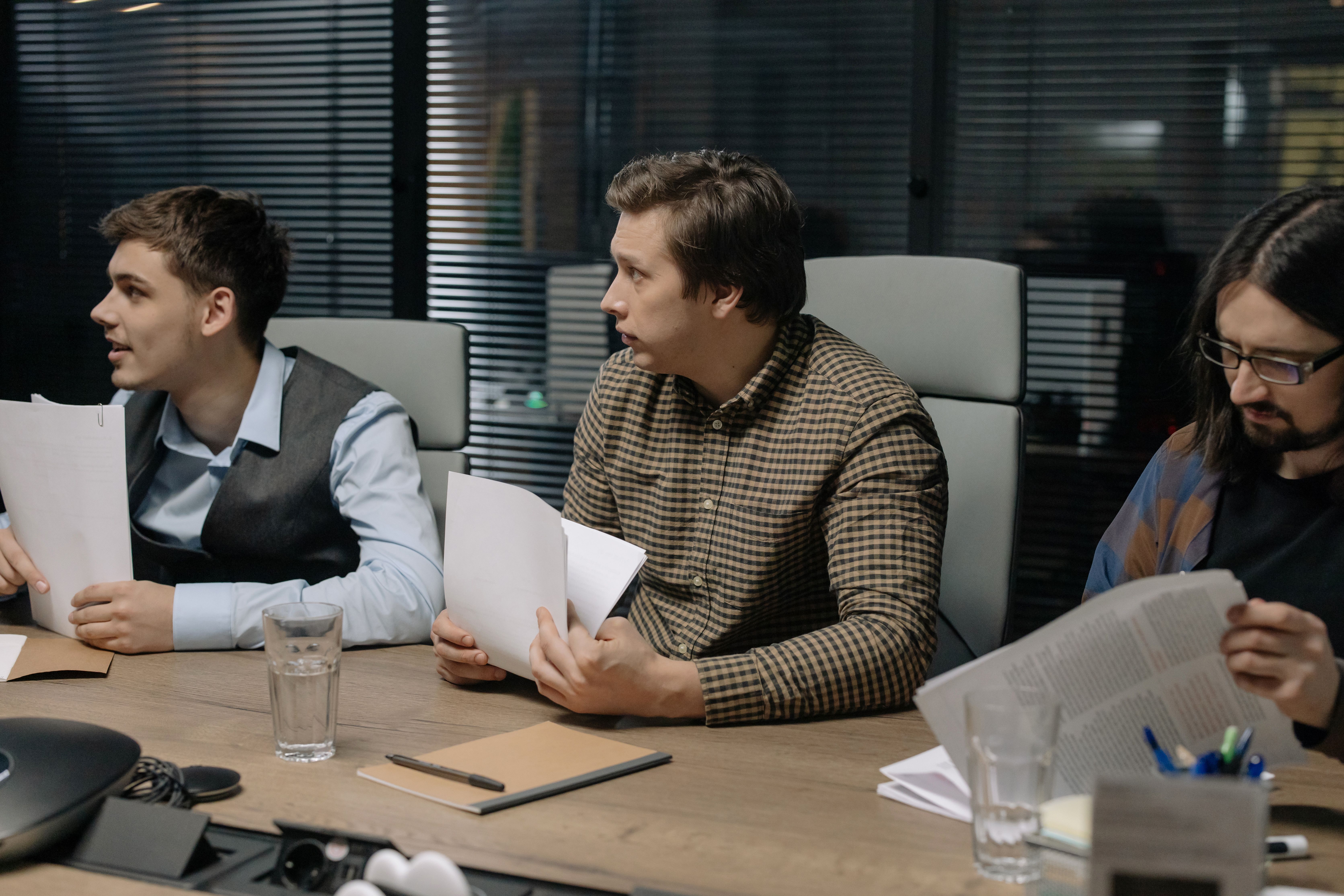
Twenty-two minutes into a two-hour agenda, he closed his folder.
"We are going to stop. I will send a note this afternoon about rescheduling."
Nobody moved for a moment. The CFO was standing at the screen halfway through the second slide of a liquidity update that the entire meeting had been built around.
The chair said one more thing before he left. "This is not about the numbers. I do not think this room can make a good decision today and I would rather find out why than push through."
What he had read
Three things, none of them on the agenda.
The CEO had arrived four minutes late, which he never did, and had not made eye contact with the CFO on the way in. The two of them had been in something before the meeting.
The head of the audit committee had asked a procedural question in the first ten minutes that had nothing to do with anything. In eleven years the chair had learned that this particular director asked procedural questions when he was holding something substantive and had not decided whether to raise it.
And the room was quiet in the wrong way. Not attentive. Braced.
He did not know what any of it was about. That was precisely why he stopped.
The reasoning most chairs do not apply
A board meeting produces one thing of value, which is a decision made with the full information and judgment of the people in the room.
When the room is carrying something unaddressed, you do not get that. You get a decision made by a subset of the room's capability, and it looks identical to a good decision from the outside. The minutes are the same. The vote is the same. The quality is not, and you find out eighteen months later.
Most chairs will push through, for entirely reasonable reasons. People have travelled. The agenda is full. The liquidity decision has a timeline. Stopping a meeting is expensive and visible and requires explaining.
His view, developed over four boards and about twenty years, is that the cost of a bad decision made by a compromised room exceeds the cost of rescheduling by an order of magnitude, and that the second cost is visible while the first is not.
What he found out
He called the CEO that afternoon.
There had been a conversation before the meeting in which the CFO had told him she was planning to leave in the next six months. She had told him in confidence, twenty minutes before a meeting where she was presenting a liquidity plan whose execution assumed she would be there.
The CEO had been sitting in that meeting trying to work out whether he was obliged to disclose it before the board voted.
The audit chair had heard a rumour about it from a third party the previous week and had spent the first twenty minutes deciding whether to ask.
Three people in that room were holding versions of the same information. None of them could raise it. The vote would have happened on a plan whose central assumption was known by three people to be unsafe.
The reconvened meeting
Eleven days later, with the CFO's situation on the table and resolved into a transition plan.
The liquidity decision they made was different in two material respects from the one that had been proposed. Both changes came directly from the fact that the timing assumptions had been rebuilt.
The chair has never described the original meeting as a near miss in any formal setting. Privately he calls it the best twenty-two minutes of chairing he has done.
Doug Noll's new book Empathy Leadership: The Powerful Skill That Drives Winning Results covers reading the state of a room and acting on the read. Pre-order it on Beyond Words.
What to watch for
He keeps a short list of things that make him consider stopping a board meeting. None of them are about content.
Two people who normally interact are not interacting.
Someone asks a question that does not fit the discussion. This almost always means they are holding something and testing whether the room is safe.
The room is quiet in a way that is not attentive. He says this is the hardest to describe and the most reliable once you can feel it.
An executive presenting looks at the CEO before answering a question they are qualified to answer alone.
The alternative to stopping
You do not always have to end the meeting. There is a cheaper intervention that works most of the time, and it is a sentence.
"Something is in this room that is not on the agenda. I would rather we name it than work around it."
Then wait. This is affect labeling applied at the level of a group, and it works for the same reason it works with an individual. Naming an unspoken state reduces its power to distort what happens next.
About half the time somebody says what it is. The other half you learn something from who does not speak.
For related reads, see Meeting Facilitation Without Force and Executive Function Beyond Reaction.
If you chair a board and suspect your rooms are making decisions with information they are not surfacing, book a no-obligation Zoom call with Doug Noll.