Why the Family Constitution Didn't Save Them
%201.avif)

The family constitution ran to forty-one pages.
It had taken fourteen months and cost, all in, somewhere close to $900,000 across a governance consultancy, two law firms, and an offsite in Portugal that everyone described as a turning point.
It defined the family council, the shareholders' assembly, and the board. It set out dividend policy, employment criteria for family members, a dispute resolution ladder with three named stages, and a values statement that four of the thirteen signatories had personally drafted.
Every adult family member signed it in November.
They split in the second week of March, twenty-eight months later, over a decision the constitution explicitly covered.
What the document could not do
The constitution said that material related-party transactions required disclosure to the council and a two-thirds vote.
In February the second son entered into a supply arrangement between one of the operating companies and a business owned by his wife. He disclosed it. He put it to the council. It received a two-thirds vote.
Every step was followed. The document worked exactly as designed.
What the document could not address was that his sister had raised a concern about the arrangement in the council meeting, had been answered procedurally rather than substantively, and had voted yes because the alternative was being the only no in a room of nine.
The constitution governed the transaction. It had nothing to say about the fact that the room could not hold her objection.
Documents govern decisions, not the conditions decisions are made in
This is the thing that seven-figure governance projects consistently fail to grasp.
A governance framework specifies who decides what, by what threshold, following which process. It presupposes that the people in the room are able to say what they think.
That presupposition is doing enormous work and it is almost never examined.
If your family cannot disagree in a room, the constitution does not fix it. The constitution formalises it. Every unspoken objection now passes through a documented process and emerges with a legitimacy stamp on it, which makes it substantially harder to revisit later.
Good governance applied to a room that cannot be honest produces well-documented bad decisions faster than no governance at all.
What was actually wrong in that family
Three things, none of which were in scope for the consultancy.
The patriarch had a habit, over four decades, of responding to disagreement with a long silence followed by a change of subject. Nobody had ever named it. Everybody had adapted to it.
The second son and the eldest daughter had an unresolved rupture from 2016 involving a role that was promised and then not given. They had not spoken about it directly. They worked together weekly.
The family had never once had a facilitated conversation in which anybody said anything difficult. The Portugal offsite had been, by universal description, lovely.
Forty-one pages of governance sat on top of that. It was a very well-built structure on a foundation nobody had surveyed.
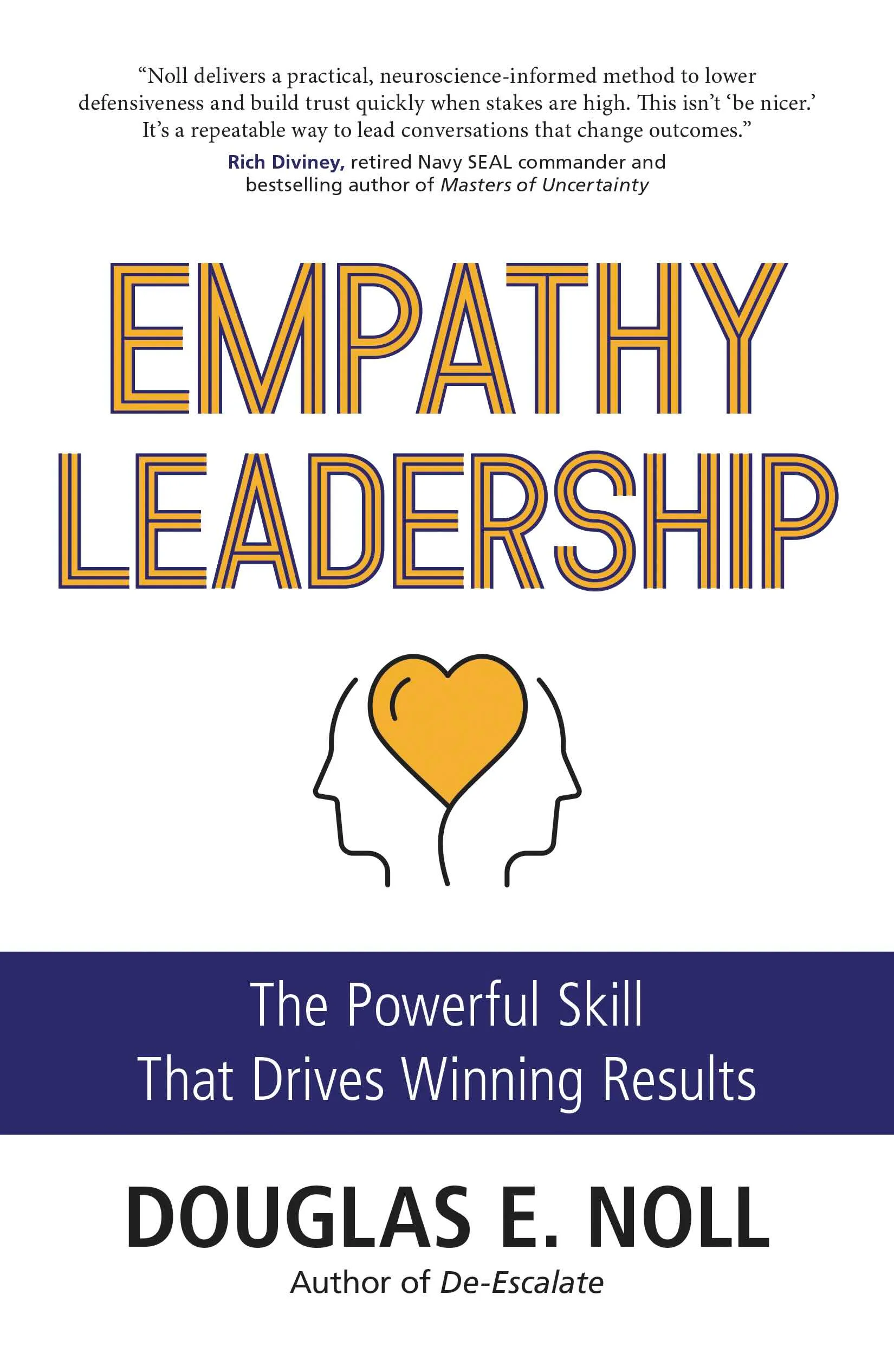
Doug Noll's new book Empathy Leadership: The Powerful Skill That Drives Winning Results covers the layer underneath governance that determines whether governance functions. Pre-order it on Simon & Schuster.
The sequence that works
Governance projects should run in the opposite order to how they are usually sold.
First, establish whether the family can disagree. Not whether they say they can. Test it. Put a genuinely contested item in a facilitated room and watch what happens. The information you get in ninety minutes is worth more than the fourteen-month project.
Second, address whatever that surfaces. Usually two or three specific unresolved things between specific people. That is the actual work and it is uncomfortable and it does not produce a deliverable anyone can put on a shelf.
Third, write the document. By this point it will be shorter, because much of what governance documents contain is an attempt to route around conversations the family cannot have.
Most families do these in reverse and then wonder why the document did not hold.
What they did after the split
They did not throw the constitution away. Most of it was sound and it is still in force.
They added one thing, which the governance consultancy had never proposed: a standing requirement that any council decision carried by less than unanimity triggers a private conversation between the chair and each dissenting or abstaining member before the decision is executed.
It has been used four times in three years. Twice it changed the decision. Once it surfaced something that had been sitting unaddressed since 2016.
For related reads, see Leadership Systems for People Problems and Workplace Conflict and HR Training.
The honest question
If your family has a constitution, a charter, or a shareholders' agreement, ask yourself one thing.
When did anyone last say something genuinely difficult in a room with everyone present?
If you have to think about it for more than five seconds, the document is holding a building whose foundation nobody has looked at.
If your family has excellent governance and cannot have hard conversations, book a no-obligation Zoom call with Doug Noll.
Emotional Competence Shapes Your Influence as a Leader
This 90-second emotional competence quiz will tell you how your emotions affect the way you are treated at work and how to gain the respect and influence you deserve as a leader.
Take the Free Assessment
Doug’s Books
Doug has authored several books on affect labeling and emotional competency, including De-Escalate: How to Calm an Angry Person in 90 Seconds or Less, which won multiple awards and has been adopted by organizations worldwide.