The Wealth Manager Who Became a Family Therapist
%201.avif)

She had managed the relationship for nine years and roughly $400 million.
Her formal remit was allocation, manager selection, and reporting across a family with three branches, eleven adult members, and a governance structure that generated four scheduled touchpoints a year.
She kept a private log for a quarter, out of curiosity, after a colleague made an offhand comment about how much time the account consumed relative to its economics.
Of roughly 140 client-facing hours in that quarter, she categorised 54 as investment work.
The remaining 86 hours were something else, and none of it appeared in any description of her job.
What the 86 hours were
Twenty-two hours were pre-meeting calls with individual family members, in which they told her what they actually thought before a meeting in which they would say something different.
Nineteen hours were post-meeting calls in which they told her how the meeting had felt.
Fourteen hours were what she eventually labelled "translation," which meant explaining one branch's position to another branch in language the second branch could hear.
Eleven hours were a single dispute about a property that had no material effect on the portfolio and had been running, in various forms, since 2019.
The rest was scattered. Two hours on a phone call with a client's son about whether to join the family business. Ninety minutes talking a client out of an emotionally-driven decision to liquidate a position for reasons that had nothing to do with the position.
The thing she got right that most advisors get wrong
She did not treat the 86 hours as overhead.
The standard framing in the industry is that this work is friction, that it sits between the advisor and the actual mandate, and that a well-run relationship minimises it.
She reached the opposite conclusion, and she reached it from the numbers.
Every one of the four largest allocation decisions she had executed in nine years had been unblocked by something in the 86-hour category rather than by anything in the 54. The technical case had been ready in each instance for weeks or months. What moved it was a conversation with one person, usually alone, in which something got named that could not be named in the room.
The 54 hours produced the recommendation. The 86 hours determined whether it could be executed.
What ultra high net worth families are actually buying
Allocation advice is close to a commodity at the top of the market. A family with $400 million can access excellent technical work from a large number of providers, and most of that work will be broadly similar because it is derived from broadly similar inputs.
What is scarce is a professional who can sit in a family's dynamics without being absorbed by them, and who can say the true thing at the moment it needs saying.
That capability has a name and it is not "soft skills." It is applied emotional intelligence under conditions of significant financial consequence, and almost nothing in professional training develops it.
Her firm's competency framework had eleven categories. None of them described what she spent sixty percent of her time doing.
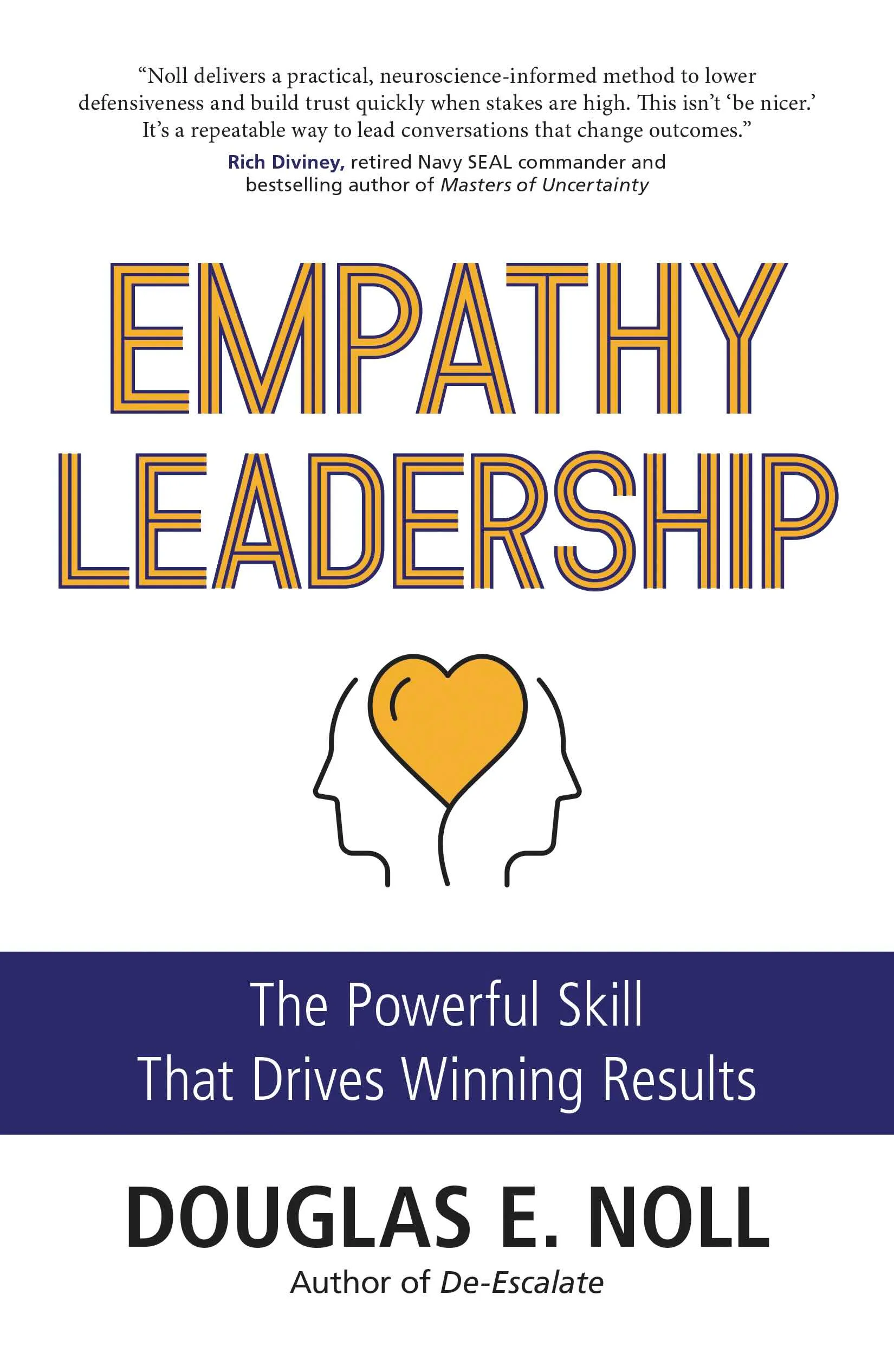
Doug Noll's new book Empathy Leadership: The Powerful Skill That Drives Winning Results covers the specific competency that determines whether technical advice can be acted on. Pre-order it on Simon & Schuster.
The boundary that made it sustainable
The obvious risk in this work is that the advisor becomes the family's therapist, which is bad for the family, bad for the advisor, and eventually bad for the mandate.
She held a boundary that is worth stating precisely, because it is more useful than "do not get too involved."
She would name a state. She would not explore it.
If a client was clearly angry about something, she would say so, once, plainly. "You are angry about how that was decided." Then she would stop, and if the client wanted to go into it, she would listen without steering, and she would not ask a second question.
Naming is a professional act. It is what allows the work to proceed. Exploring is a clinical act and it is not hers to do.
The distinction sounds thin and it is the entire difference between an advisor who can hold a complex family for two decades and one who burns out or gets entangled inside three years.
What she changed after the audit
Three things.
She stopped apologising internally for the time. When a colleague asked why the account took so much, she stopped saying "difficult family" and started saying "eighty-six hours of execution enablement," which is both accurate and considerably harder to dismiss.
She scheduled the pre-meeting calls rather than letting them happen randomly, which reduced the total time and improved the quality of the meetings.
She started training the two juniors on the account in the naming technique explicitly, rather than assuming they would pick it up.
For related reads, see Emotional Competency Without Playing Therapist and High-Status Empathy Not Therapy.
The exercise
If you advise families, log your hours by category for one quarter. Investment work in one column, everything else in the other.
Then look at your largest completed decisions and ask which column unblocked each one.
Most advisors who run this exercise discover they are being paid for the first column and retained for the second.
If most of your client work is not the work in your job description, book a no-obligation Zoom call with Doug Noll.
Emotional Competence Shapes Your Influence as a Leader
This 90-second emotional competence quiz will tell you how your emotions affect the way you are treated at work and how to gain the respect and influence you deserve as a leader.
Take the Free Assessment
Doug’s Books
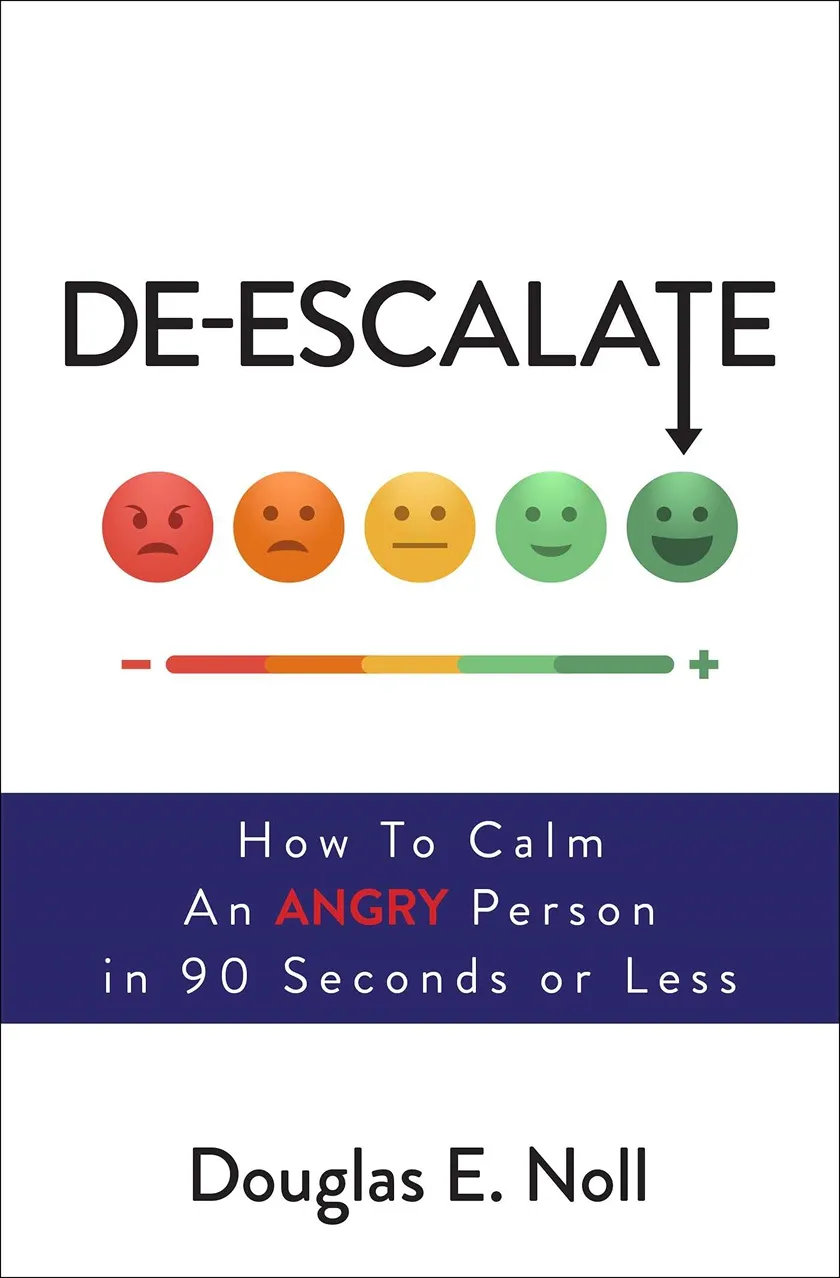
Doug has authored several books on affect labeling and emotional competency, including De-Escalate: How to Calm an Angry Person in 90 Seconds or Less, which won multiple awards and has been adopted by organizations worldwide.