What Empathy With Strategy Looks Like for the C-Suite: 5 Practical Examples


The strategy offsite ran for three days and produced a 42-page deck.
The CEO brought the deck to the executive committee the following Monday and watched his C-suite agree to every slide with a flatness that told him the deck was going to be executed badly. The CFO signed off on the capital allocation. The COO signed off on the operating plan. The CRO signed off on the revenue targets. Nobody argued with anything, which meant nobody owned anything, which meant the strategy was going to be revised in six months after it did not land.
The CEO called an advisor the following week and described the pattern. The advisor said one thing. "Your strategy is clean. Your executives are not committed to it. Those are different problems. You keep solving the first one."
Here are five executive examples of what empathy with strategy looks like at the C-suite, in the specific moments where strategy either lands or gets quietly reversed by people who said yes in the room.
1. Making space for the dissent that has not been voiced
The CEO who presents a strategic plan and asks "any concerns?" at the end has already told the room that concerns are a procedural formality. The executives who have real concerns do not raise them. The plan ships. The concerns surface in month three as execution problems.
The CEO who runs this differently asks a different question before presenting the plan. "Before I take you through this, I want to hear what each of you thinks the plan should look like, in your area, with no reference to what I am about to show. Fifteen minutes each."
What this produces is uncomfortable and useful. The executives name what they would actually do, which usually differs from what the CEO is about to present. The gap is where the real strategic conversation lives. By the time the CEO's version lands, the room has articulated its own position and the discussion is substantive rather than ceremonial.
This is empathy with strategy. It costs the CEO 90 minutes. It changes whether the plan actually gets executed.
2. Separating the strategic choice from the identity question
The CRO's three-year commercial plan is on the table. The CEO has concerns about it. The direct approach is to list the concerns. The indirect-but-effective approach starts with one sentence first.
"Before I give you my read, I want to say that this is not a referendum on whether you continue to run this function. We are talking about the plan, not about you. I want you to be able to defend the plan without having to defend yourself."
The CRO's defensiveness drops two notches. The subsequent conversation is about the plan on its merits, not about the CRO's standing. The quality of the analysis improves. The decision that gets made is better. The CRO leaves the room still running the function.
A CEO who cannot separate these two things loses capable executives to defensive posture. A CEO who can produces better strategic decisions and keeps more of the people who make them.
3. Naming the strategic shift that the market has not confirmed yet
Six months in, the executive team is executing the plan. One of the strategic bets is not working the way the deck predicted. The CFO sees it in the numbers. The COO sees it in the operations. The CRO is still defending the original plan because the CRO owned the bet.
A CEO who waits for the quarterly review to raise it loses two more months. A CEO who raises it in week ten, directly, saves the two months.
The way to raise it is specific. "I am watching the Q2 numbers on the enterprise initiative and I think the original thesis may not survive the next quarter. I know you have been defending this and I know it is going to be hard to shift, and I want to work on this with you before it becomes a board conversation."
Empathy with strategy means naming the shift when you see it, in a way that gives the owner space to adjust without losing position.
If a C-suite is losing four hours a week across the executive team on one quietly-wrong strategic assumption, that is roughly $200,000 a year at exec hourly rates, before counting the opportunity cost of the decisions that compound against it. The exact number is a two-minute input in Doug's cost of conflict calculator.
4. Deliberately losing an argument on a public point
The CEO is in a leadership meeting. The VP of Product is pushing back on a specific decision the CEO made. The pushback is correct. In the standard version, the CEO defends the decision because defending is reflex. In the version that builds strategic empathy, the CEO publicly changes position.
"You are right. I made this call too fast. Let's go with your version. I want to say in this room that I had the wrong read."
The entire leadership team registers this. The next time someone has a correct dissent they are more likely to voice it. The CEO has paid a small amount of ego cost and bought back a large amount of strategic input. The next strategic plan the leadership team produces will be meaningfully better because of this one exchange.
This is the hardest empathy move for strategy-oriented CEOs and it is the one with the highest downstream return.
5. Protecting an executive who delivered bad news early
The COO comes to the CEO in week six to say that the operational initiative the CEO personally championed is going to miss its milestone. The COO knows this early because the COO is paying attention. The CEO's instinct is to probe for whether the COO is being accurate or defensive.
The CEO who runs this correctly does the opposite. The CEO thanks the COO for naming it in week six, publicly in the next leadership meeting, with specific attribution. "I want to recognise that you flagged this in week six when most people would have waited for the quarterly. That is exactly the behaviour I need from this team."
The leadership team registers that early bad news is rewarded rather than punished. The next round of bad news arrives earlier. Strategy becomes self-correcting on a shorter cycle. This is the long-term operational return on empathy with strategy, and it compounds.
Doug Noll teaches Decision-Making Under Stress and Conflict at Pepperdine's Straus Institute, has mediated complex business disputes for 25 years, and co-founded the Prison of Peace Project. His work with executive teams focuses on the specific moments where strategic decisions and emotional dynamics intersect.
Doug runs a quarterly Roundtable with six to eight founders working the same leadership-room problem in one room. The next one is $7,500 a seat. See if the Roundtable fits.
The CEO's second offsite
He ran the next one differently. He opened by asking each executive to describe their own three-year plan for the company before he presented his. The resulting conversation produced a strategy that was 60 percent his original version and 40 percent incorporated from the room.
That strategy got executed. The previous one had not.
For related reads, see why empathy in leadership keeps dying on Monday and what emotional mastery for leaders looks like in a boardroom crisis.
Empathy with strategy is not a soft modifier on strategic work. It is what determines whether the strategy gets executed by people who actually agreed to it.
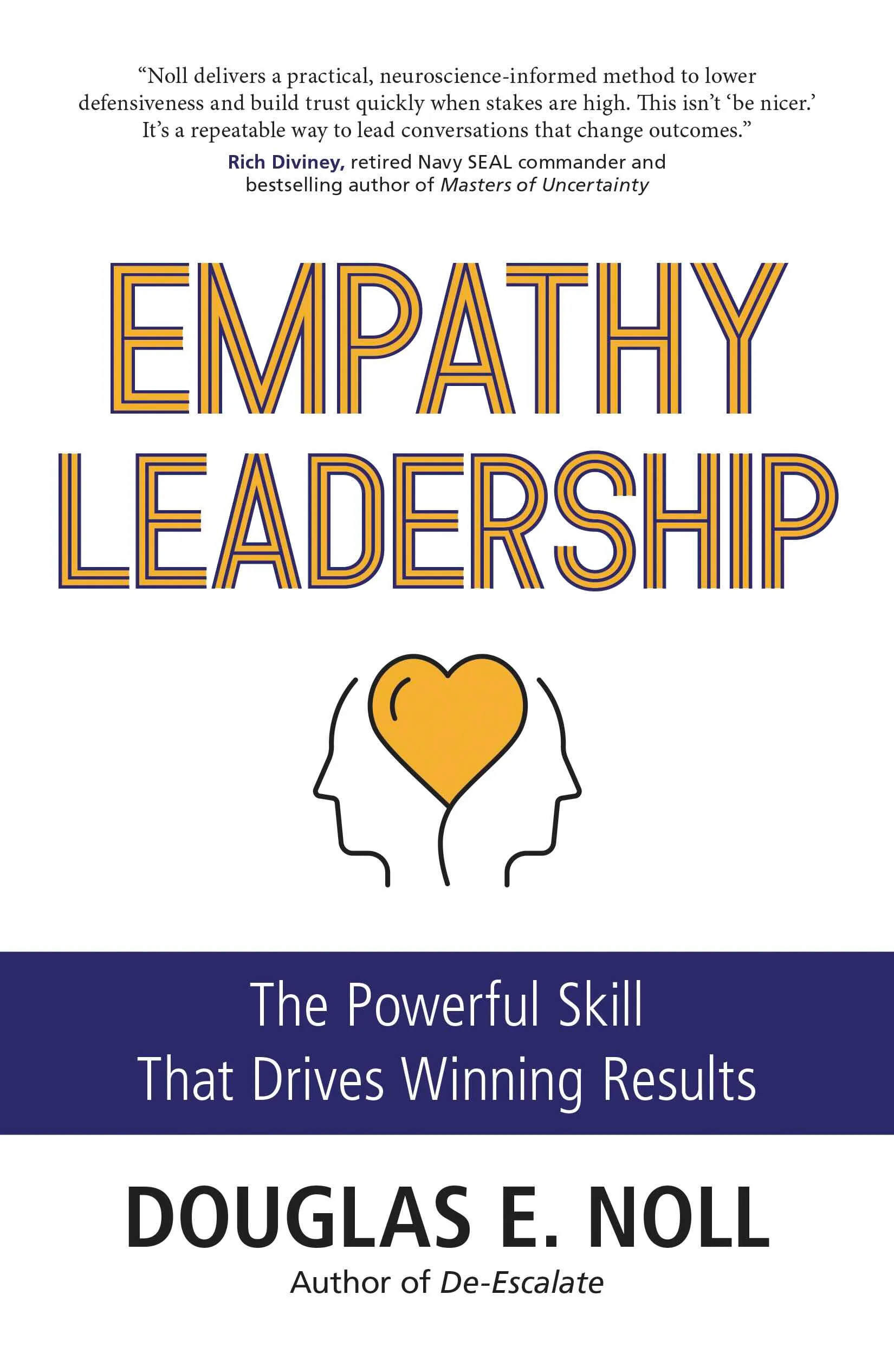
Empathy Leadership: The Powerful Skill That Drives Winning Results is out now. Order on Amazon, or if a 20-minute call would be more useful, Doug's calendar is here.
Emotional Competence Shapes Your Influence as a Leader
This 90-second emotional competence quiz will tell you how your emotions affect the way you are treated at work and how to gain the respect and influence you deserve as a leader.
Take the Free Assessment
Doug’s Books
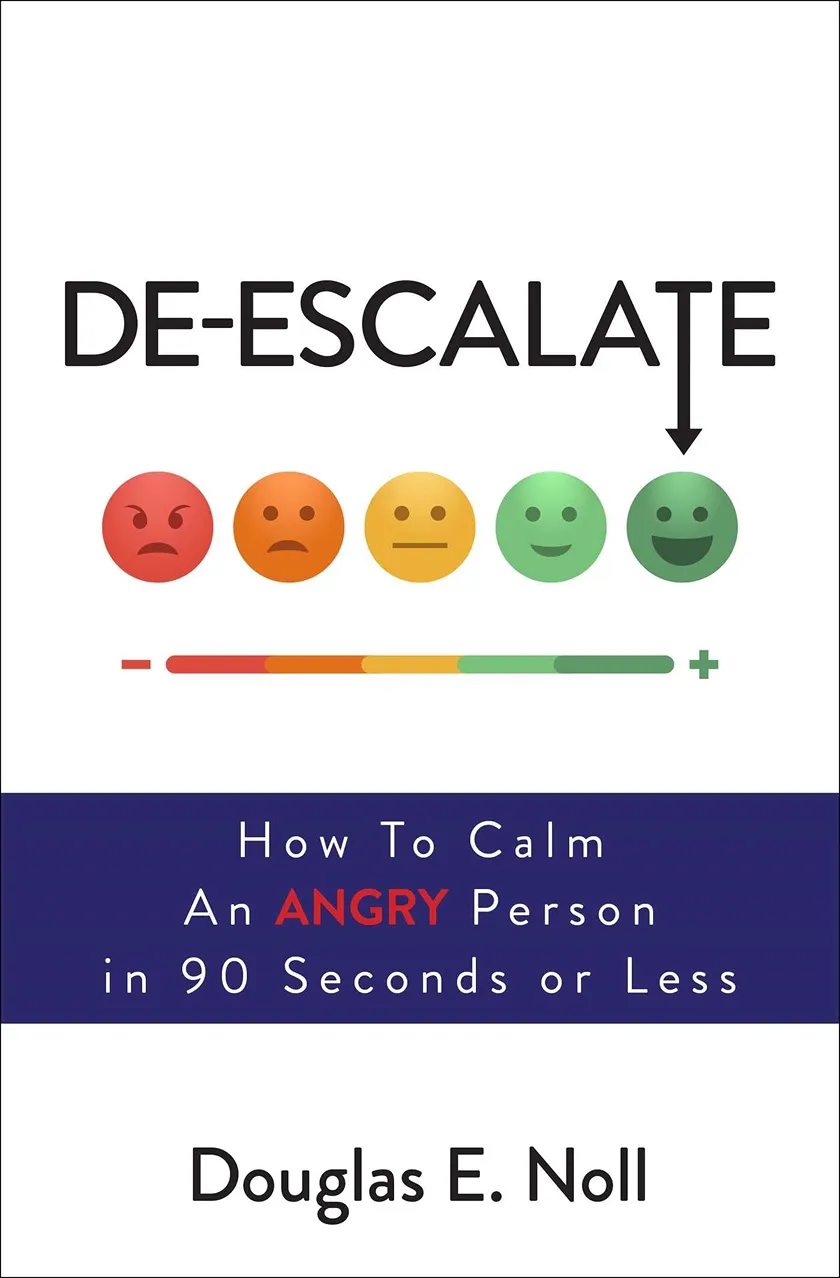
Doug has authored several books on affect labeling and emotional competency, including De-Escalate: How to Calm an Angry Person in 90 Seconds or Less, which won multiple awards and has been adopted by organizations worldwide.
More Blogs
View All