What the Best Portfolio Operators Know About Anger That MBAs Don't Teach
%201.avif)

She can tell in about two hours.
Thirty-one years, four funds, somewhere over sixty portfolio companies. She walks into an underperforming business and she does not start with the P&L, because the P&L tells her what happened and she wants to know why.
She sits in one leadership meeting. Not a special one. Whatever is on the calendar.
What she is watching for is what happens when two people disagree.
The four patterns
She describes four things a leadership team can do with a disagreement, and she says the fourth is almost always what she finds in a company that has stopped growing.
They resolve it. Two people disagree, argue it in the room, one of them changes their mind or they escalate cleanly to the person who decides. This is rare enough that she notes it when she sees it.
They defer it. "Let's take that offline." Sometimes offline happens. In a healthy company it happens about two-thirds of the time.
They escalate it prematurely. Everything goes to the CEO. Slow, but at least visible, and it usually indicates a structural problem rather than a cultural one.
They route around it. This is the fourth pattern and it is the one that predicts underperformance. Two people disagree, neither says so, and both quietly proceed as though they had agreed. The disagreement does not resolve, defer, or escalate. It just goes underground and comes back six weeks later as a project that has been built twice.
What routing around looks like from a chair in the corner
She has a short list of tells.
Somebody says "makes sense" in a tone that does not match. Nobody follows up.
A decision gets made and two people immediately have a private conversation in the hallway. She always notices who leaves a room together.
Someone raises a real objection and the CEO says "good point" and moves to the next agenda item. The good point is never mentioned again by anyone.
The meeting ends early. Consistently early meetings in a company with a growth problem are one of the strongest signals she knows. It means the hard things are not being discussed in the room where they are supposed to be discussed.
Why anger is the diagnostic
This is the part that most people find counterintuitive and that she is emphatic about.
She is not looking for a calm leadership team. Calm leadership teams in underperforming businesses are usually calm because the friction has been driven out of the room, and friction driven out of a room does not disappear. It relocates to somewhere you cannot see it.
She wants to see anger. Specifically, she wants to see anger that is expressed, received, and metabolised in the room without anybody being damaged by it.
A team that can do that has a working mechanism for the hardest information. A team that cannot will systematically fail to surface bad news, which means the CEO and the board will consistently learn about problems later than they could have, which is the actual mechanism by which portfolio companies underperform their plans.
Anger is data with heat attached. Emotion regulation in a leadership team is not about removing the heat. It is about being able to hold the heat long enough to get the data out.
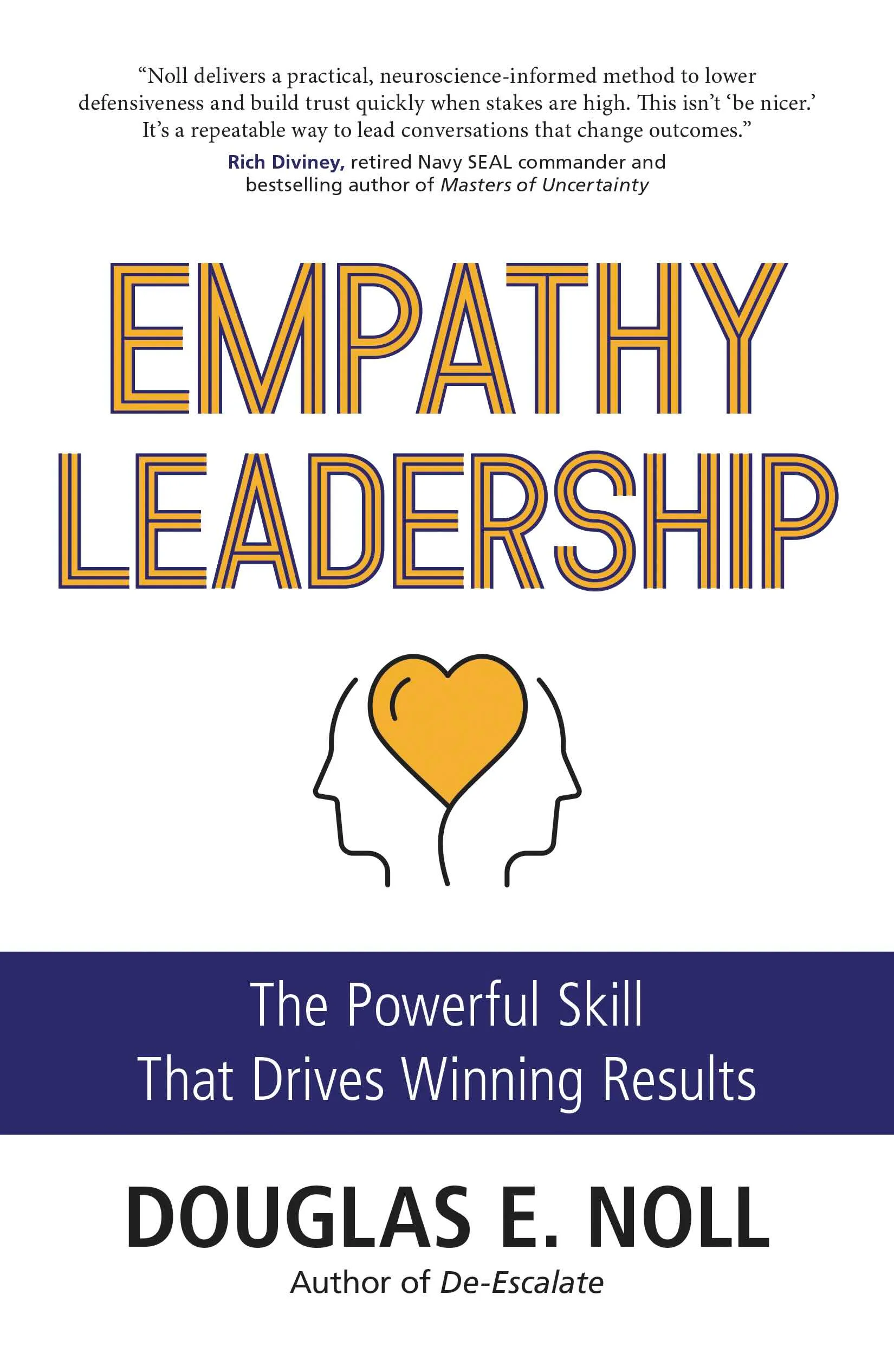
Doug Noll's new book Empathy Leadership: The Powerful Skill That Drives Winning Results covers how leadership teams metabolise anger instead of suppressing it. Pre-order it on Books-A-Million.
What she actually does about it
Not an offsite. She is dismissive about offsites, on the grounds that they produce a temporary state that does not survive contact with the next Tuesday.
She does three things, all of them inside existing meetings.
She makes disagreement a required output. Every material decision has to have a named dissenting case, presented by someone other than the person proposing it. Not devil's advocacy as a ritual. An actual person is assigned to build the strongest case against, and they are held to the quality of it.
She stops the meeting when someone says "makes sense" in the wrong tone. One sentence: "That did not sound like agreement. What is the reservation?" She says this is the single highest-yield intervention she knows and it takes four seconds.
She has the CEO lose an argument in public, deliberately, within the first month. Not a fake one. She waits for a real disagreement where the CEO is genuinely on the weaker side, and she makes sure it plays out in front of the leadership team rather than getting deferred.
That third one changes the physics of the room faster than anything else, because it establishes empirically that being right is available to people who are not the CEO.
The number she quotes
She says that in her experience, a leadership team that routes around conflict operates at roughly 60 to 70 percent of its effective decision speed, and that the gap does not appear in any metric until it appears in the growth rate two or three quarters later.
That is not a rigorous figure and she does not claim it is. It is thirty-one years of pattern recognition, and she has been right often enough that the firm now sends her in before it sends in the strategy consultants.
For related reads, see De-Escalation Skills and The Conflict Model Operating System.
If your portfolio company is underperforming and the strategic explanations are not landing, book a no-obligation Zoom call with Doug Noll.
Emotional Competence Shapes Your Influence as a Leader
This 90-second emotional competence quiz will tell you how your emotions affect the way you are treated at work and how to gain the respect and influence you deserve as a leader.
Take the Free Assessment
Doug’s Books
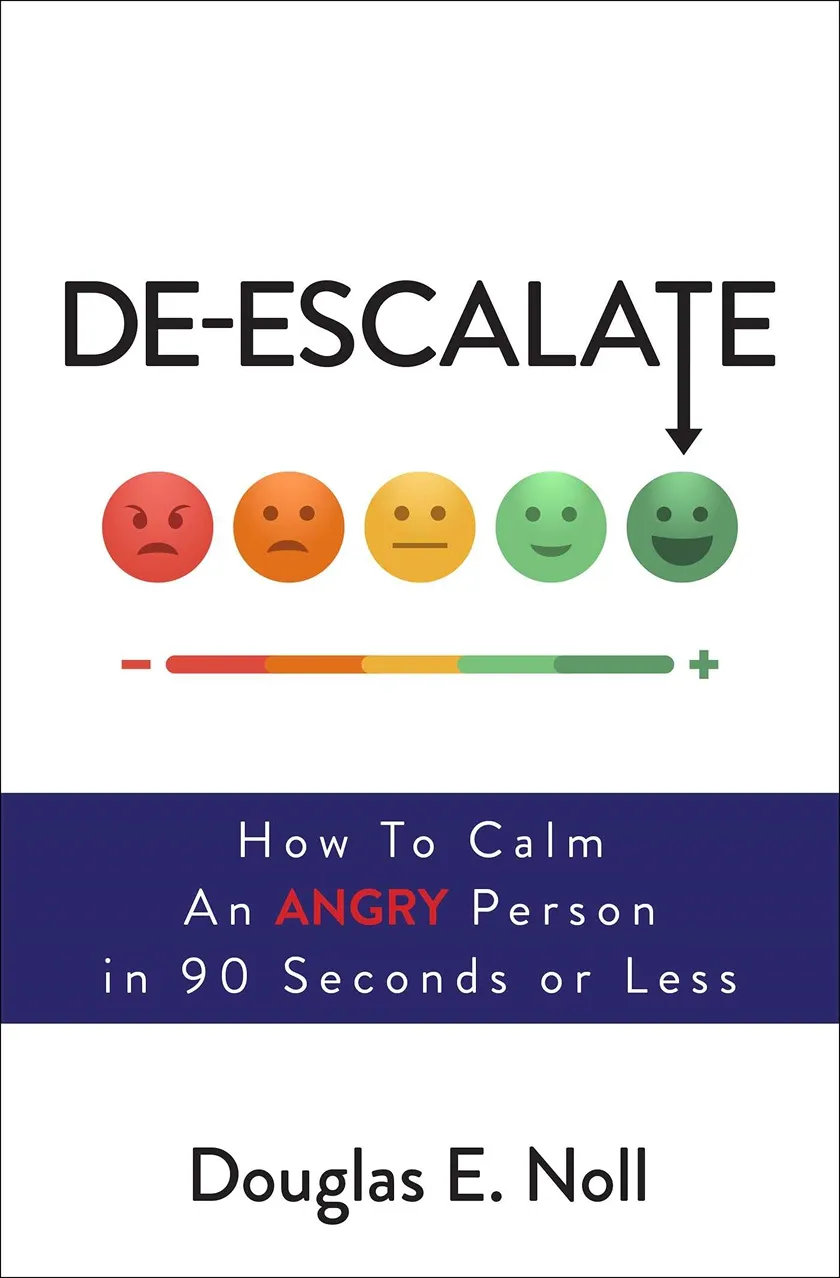
Doug has authored several books on affect labeling and emotional competency, including De-Escalate: How to Calm an Angry Person in 90 Seconds or Less, which won multiple awards and has been adopted by organizations worldwide.
.jpg)