5 Powerful Examples of Demonstrating Empathy in the Workplace Without Playing Therapist


The VP of Engineering sat in a one-on-one with his direct report and heard about her marriage falling apart.
He had asked how she was doing because it was the first question in his standard one-on-one template. He had not expected the actual answer. Twenty minutes later she was still talking. He had cancelled his next meeting without saying so. He had no idea what the right thing to say was. He said "that sounds really hard" eleven times and nothing else.
By the end of the week he had received a note from his director. "I appreciate you supported her but we need to talk about where the line is. You cannot be running pastoral care for your reports."
The line he had crossed is specific, common, and almost never articulated. Here are five examples of demonstrating empathy in the workplace that acknowledge the human being in front of you without positioning you as their therapist.
1. Acknowledge without inviting elaboration
When a report mentions something hard in their personal life, the empathetic response is to acknowledge it in a single sentence and keep the conversation professional. "That sounds like a lot to carry alongside everything else here. I hope you have the support you need." Then redirect to the work.
This is not cold. It respects both parties. It communicates that you heard them and that you are not going to become the person they process the thing with, because that is not your role and because playing that role usually produces an outcome that hurts both of you.
The direct report receives acknowledgment, not therapy. The relationship stays professional. The work gets done.
2. Offer the specific resource rather than the ongoing availability
If an executive wants to actually help a report who is going through something hard, the useful move is to offer a specific external resource rather than opening a channel for ongoing emotional support.
"Our EAP has specific resources for what you're describing. I'd encourage you to call them this week." Or, "Here is the name of a counsellor three of my colleagues have found genuinely useful. Please use it."
This is more useful than "my door is always open" because it provides something concrete. It also sets the boundary clearly. The executive is pointing the report toward help, not becoming the help.
3. Protect the operational relationship from the personal information
A report who has told you about their marriage, their mental health, or their family crisis is now watching to see whether that information changes how you treat them operationally. If you suddenly go easy on their deliverables, they will interpret it as pity. If you treat them exactly as before, they will interpret it as cold.
The protocol that works is to acknowledge the information in your private thinking and operate as before publicly. If the deliverable is late, raise it. If performance is slipping, address it. The acknowledgment of the personal context stays in the one-on-one. The operational relationship stays unchanged.
This is harder than it sounds. It requires separating what you know about someone personally from how you treat them professionally. Most executives either over-adjust or do not adjust at all. The protocol that produces respect is to adjust almost not at all, publicly, while acknowledging the context privately where it matters.
If a 50-person engineering function is losing an average of 30 minutes a week per person to leaders over-adjusting after personal disclosures, that is roughly $780,000 a year in lost productivity across the function. The exact number is a two-minute input in Doug's cost of conflict calculator.
4. Use affect labeling to shortcut a long conversation about process
When a direct report is spending 20 minutes relitigating a procedural grievance, the standard executive response is to engage with the content. The empathetic response is to name the emotional driver under the content and let the procedural conversation collapse.
"You're angry that this got decided without you." Then stop. The report hears their own position named accurately. The subsequent conversation is about the underlying issue, which takes four minutes, instead of about the procedural details, which were going to take 40.
This is empathy as efficiency, not empathy as kindness. Both parties get a shorter better conversation.
5. End the conversation when the useful part is over
Empathy in the workplace does not mean long conversations. It means conversations that address what needs addressing and then end. An executive who stays in a conversation past the point of usefulness is not demonstrating empathy. They are performing it, and the direct report usually notices.
The protocol is specific. When the useful part is done, say so. "I think we have landed where we need to for now. Let's reconvene on this on Friday if you want to continue, or let it rest if things feel settled."
This respects the direct report's time and your own. It also sets a model for how one-on-ones should be structured, which propagates downward through the manager layer and improves the overall meeting culture.
Doug Noll teaches Decision-Making Under Stress and Conflict at Pepperdine's Straus Institute. His approach to workplace empathy is explicitly bounded. Leaders are not therapists. The protocols above produce the respect and trust empathetic leadership is meant to produce, without the role confusion that creates problems for everyone.
If you lead a team and want to think through how to demonstrate empathy without crossing into territory that is not yours, Doug runs a 20-minute diagnostic call. Book 20 minutes with Doug.
The VP's second attempt
He went back to his report the following week and reset the conversation. He acknowledged the personal context in two sentences, offered the EAP resource, and redirected to the work. The report thanked him for the clarity. The relationship recovered. He has used the same protocol in six subsequent conversations since.
For related reads, see empathy without playing office therapist and high-status empathy that is not therapy.
Demonstrating empathy in the workplace is a bounded skill. The protocols above produce the warmth without the role confusion. Executives who master them become better managers. Executives who do not become either cold or overextended.
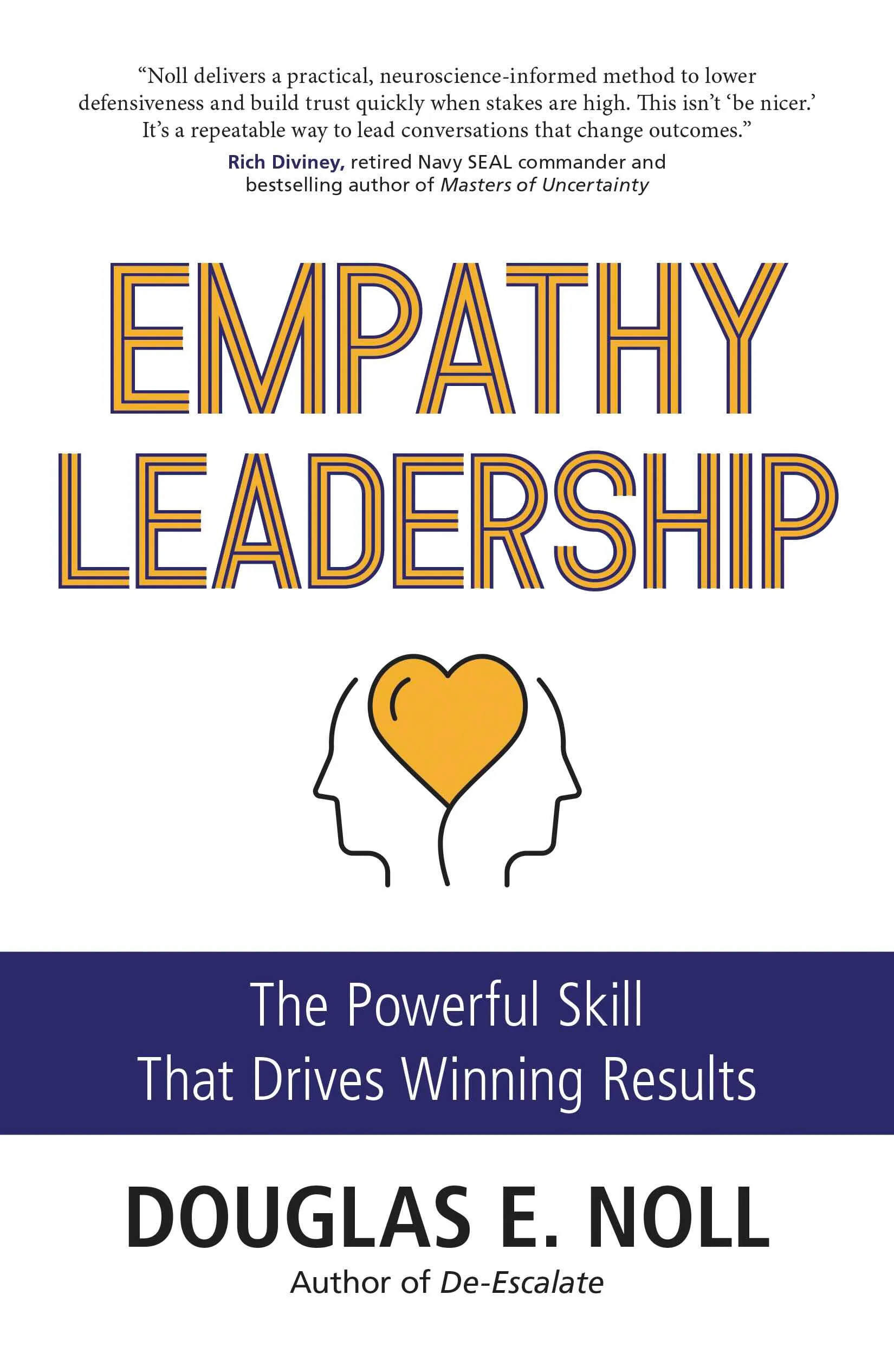
Empathy Leadership: The Powerful Skill That Drives Winning Results is out now. Order on Amazon, or if a 20-minute call would be more useful, Doug's calendar is here.
Emotional Competence Shapes Your Influence as a Leader
This 90-second emotional competence quiz will tell you how your emotions affect the way you are treated at work and how to gain the respect and influence you deserve as a leader.
Take the Free Assessment
Doug’s Books
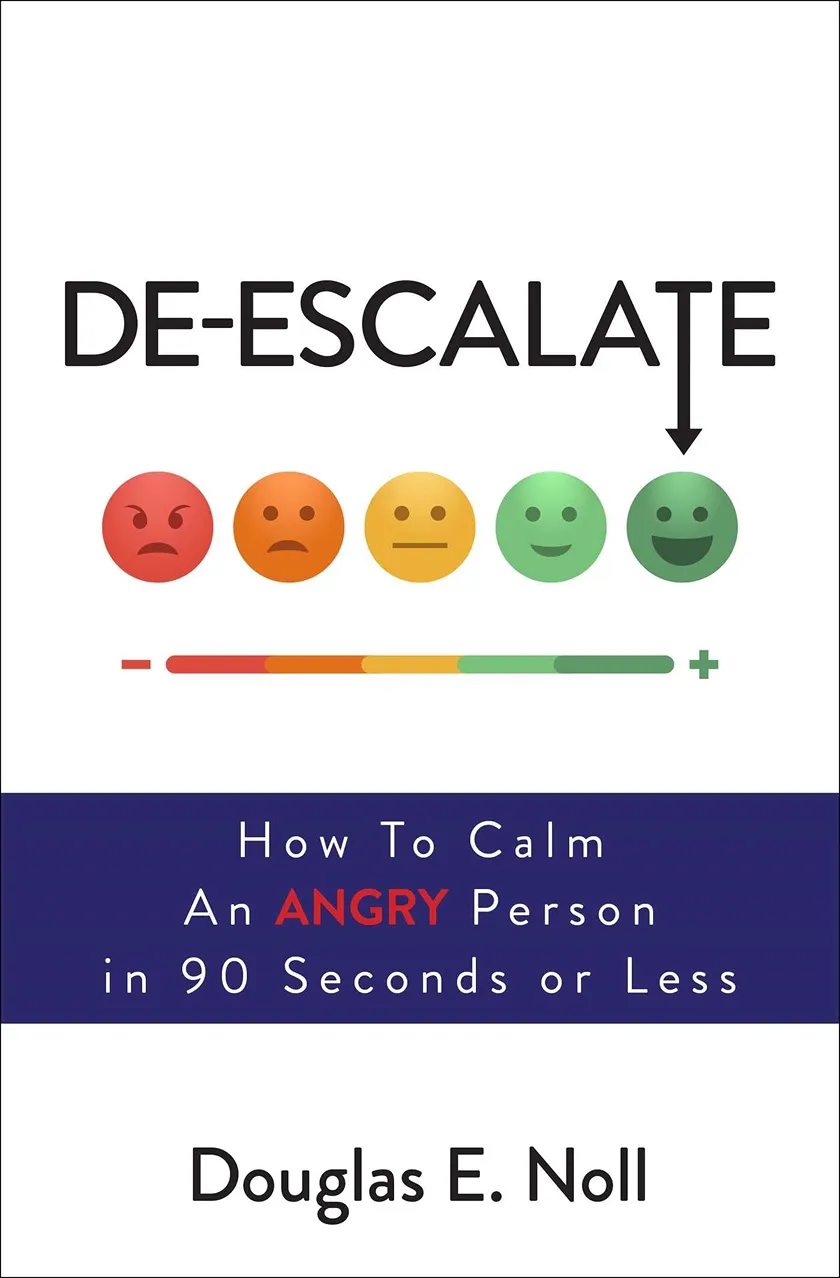
Doug has authored several books on affect labeling and emotional competency, including De-Escalate: How to Calm an Angry Person in 90 Seconds or Less, which won multiple awards and has been adopted by organizations worldwide.
More Blogs
View All