The Founder They Kept vs. The One They Replaced
%201.avif)

Same fund. Same year. Same sector. Two lower-middle-market businesses acquired eleven weeks apart.
Both were founder-led. Both founders were in their fifties. Both had built the business over roughly two decades and neither had taken outside capital before.
Both received substantially similar hundred-day plans from the same operating team.
One founder was still running his business at exit four years later, at a 3.4x. The other was replaced in month nine and the business exited at 1.6x after a longer hold.
The difference was not capability. On any assessment the fund ran before or since, the one who got replaced was the stronger operator.
The difference, in one behaviour
In month two, both founders were told the same thing by the same operating partner: that their sales compensation structure was misaligned and was producing the wrong behaviour in the field.
Both disagreed. Both were partly right to disagree, because the analysis had missed something about how their market worked.
Founder A said, "I think you are wrong about this, and I want to understand why you think it, because you have seen forty of these and I have seen one."
Founder B said, "You have been here six weeks."
Both sentences are defensible. Both express the same underlying position. The difference is that the first one keeps a channel open and the second one closes it.
What happened downstream of those two sentences
Founder A and the operating partner spent two hours on it that week. The comp structure got redesigned in a way that incorporated the market nuance the analysis had missed. It worked better than either original version.
More importantly, the operating partner now had a live channel into the business, and she used it for the next four years. When the systems decision came up in month fourteen, she had a founder who would tell her what he actually thought, which meant she could tell him what she actually thought, which meant the decision got made properly.
Founder B and his operating partner had a version of the same conversation eleven times over eight months, in progressively more formal settings, with progressively more people in the room. The comp structure was eventually imposed. It was implemented badly, because implementation requires goodwill that no longer existed.
By month nine the fund had concluded that he was not coachable. He would have said, accurately, that he had never been given a reason to trust the coaching.
The variable
It is not humility. Founder A was not humble. He was, by several accounts, difficult and certain about most things.
It is whether a leader can hold a disagreement and a relationship at the same time.
Founder B could hold a disagreement. He could not hold both simultaneously. Under challenge, the relationship became the thing at stake, and defending the position and defending the relationship became the same act.
This is a specific and observable capability. In the cognitive reframing literature it relates to whether a person can maintain access to a second perspective while under threat, which most people cannot do without training and some people do naturally.
It predicts sponsor-founder outcomes better than any operating metric the fund tracks.
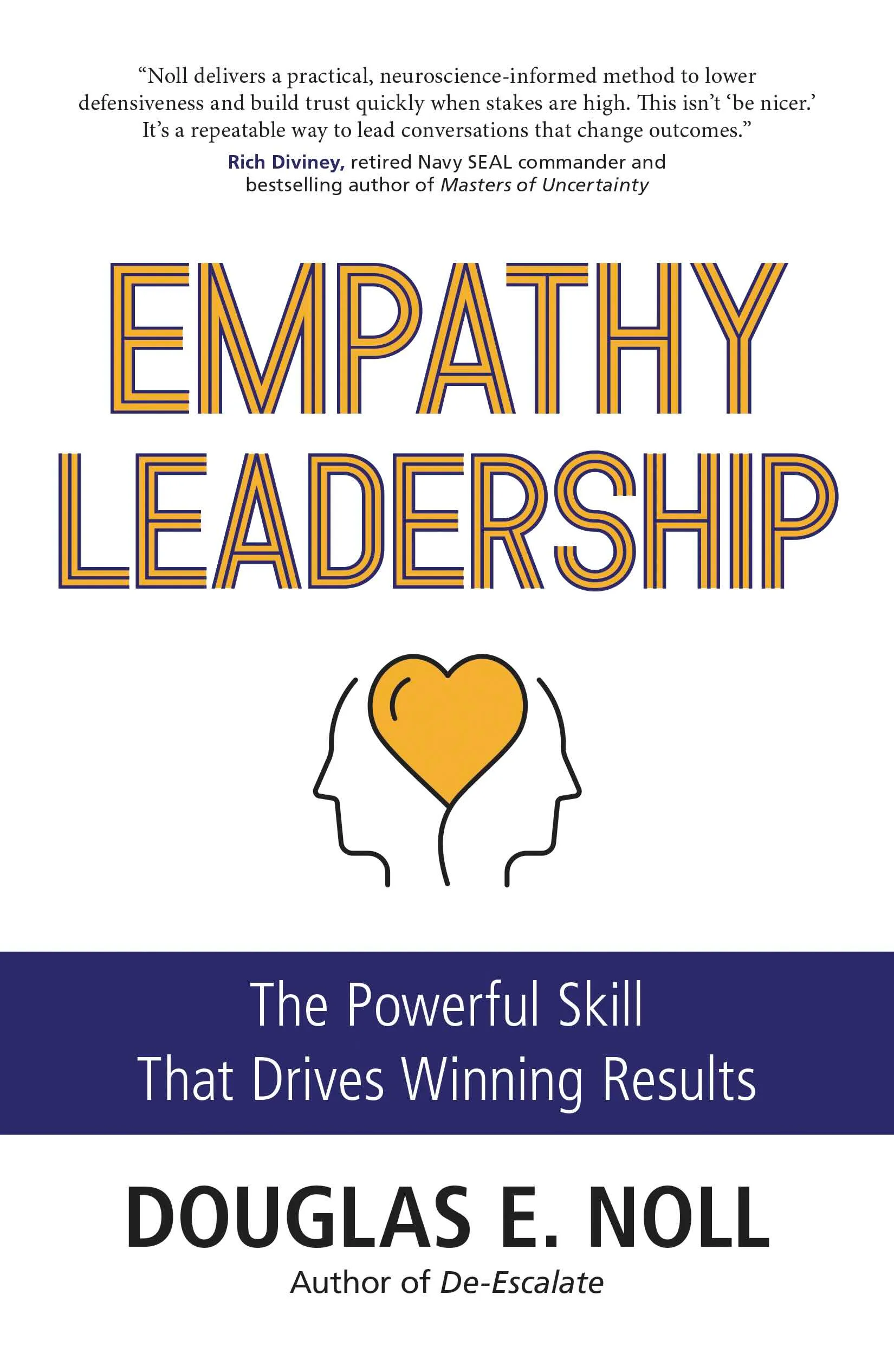
Doug Noll's new book Empathy Leadership: The Powerful Skill That Drives Winning Results covers the capability to disagree without severing, and how it is built. Pre-order it on Barnes & Noble.
What the fund does differently now
They test it in diligence, in a way that is slightly artificial and works anyway.
In the second management presentation, a partner disagrees with the founder about something the partner does not actually disagree with. It is a real business question and the position taken is defensible. Then they push, once, after the founder responds.
What they are watching for is the second response, not the first. Almost everyone handles the first challenge well. The second one is where the difference shows.
Founder A types ask a question. Founder B types restate their position with more force.
It is not a perfect instrument. It is better than anything else they have found and it costs four minutes.
The uncomfortable implication
The fund's own behaviour is half of this equation and they were slower to accept that.
Founder B's operating partner had, in month one, corrected him in front of his CFO about a customer relationship. Small thing. Never mentioned again by anyone.
In the post-mortem, when someone finally asked the founder directly what had gone wrong, that meeting was the first thing he named.
You cannot select for founders who can disagree without severing and then behave in ways that make severing rational. Both sides of that are underwriting.
For related reads, see Executive Function Beyond Reaction and Building Trust Under Pressure.
If you are assessing whether a founder can be partnered with rather than managed, book a no-obligation Zoom call with Doug Noll.
Emotional Competence Shapes Your Influence as a Leader
This 90-second emotional competence quiz will tell you how your emotions affect the way you are treated at work and how to gain the respect and influence you deserve as a leader.
Take the Free Assessment
Doug’s Books
Doug has authored several books on affect labeling and emotional competency, including De-Escalate: How to Calm an Angry Person in 90 Seconds or Less, which won multiple awards and has been adopted by organizations worldwide.
More Blogs
View All

.jpg)