What Leading With Empathy Looks Like in a Hard Quarter: 5 Executive Examples


The quarter went sideways in week four and nobody wanted to say so out loud.
Pipeline was down 18 percent. Two of the three initiatives the leadership team had committed to in January were visibly behind. The CFO had rebuilt the forecast three times, each one worse than the last, and the CEO had the uncomfortable sense that his leadership team was managing him instead of the business.
What distinguishes leaders who hold their teams through a hard quarter is not inspiration. It is not vision. It is a specific set of behaviours that most leadership literature describes with words soft enough to be useless. Here are five concrete examples of what leading with empathy actually looks like when the numbers are missing.
1. Naming the emotional state in the room before addressing the content
Monday morning. The leadership team is sitting around a table that has become quieter every week for a month. The CEO opens the meeting with a sentence most leaders avoid.
"The last three weeks have felt like we are managing each other instead of the business. I want to name that out loud because I think we all feel it and nobody has said it."
The room shifts. Not because the problem is solved. Because the problem is named, and the energy that was being spent on pretending it was not there is now available for addressing it.
This is the first move. Before you can lead a team through a hard quarter, you have to publicly acknowledge that you are in one. The leader who stays relentlessly positive loses the room, because the room knows the numbers.
2. Separating the person from the performance in a specific case
The CMO's team missed its number badly. In the standard version of this review, the CMO walks in, defends the data, blames the market, and leaves having protected her position without having learned anything. In the version a leader using empathy actually runs, the CEO opens with a different sentence.
"I know you're carrying this personally. I need you to put that down for the next 30 minutes so we can look at the data without it being about whether you keep this role. We will come back to that question separately."
The CMO exhales. Her nervous system drops a few notches. The analysis that happens for the next 30 minutes is better than the analysis that would have happened in defensive posture. The hard conversation about her role, if it needs to happen, happens later and separately, which is both kinder and more operationally useful.
3. Taking a specific hit yourself in public
The founder stood up at the end of the all-hands and said one thing that nobody expected.
"I owe this team an apology for something specific. I pushed the Series C timeline against the operating team's recommendation in October and we are now paying for it. I was wrong about the readiness. I want to say that in front of all of you because I think it has been sitting between us."
Three people in the room started crying. Nobody was fired. The CFO, who had been drafting a resignation for two weeks, deleted the draft that evening. The company did not solve its revenue problem that day, but it did fix the thing that was going to compound the revenue problem into a people problem.
This is the hardest version of empathy because it costs the leader status. It is also the one that holds a company through a quarter where everything else is uncertain.
If a 15-person team is losing an hour a day to one unresolved thing, that is roughly $280,000 a year on standard productivity rates. The exact number for your team is a two-minute input in Doug's cost of conflict calculator.
4. Asking individual leaders what they need, with the implicit understanding that the ask will be honoured where possible
Weekly one-on-ones in a normal quarter are status updates. In a hard quarter they become something different if the leader runs them correctly.
The CEO's standing question for every direct report during Q3 was two sentences.
"What are you carrying that you have not said yet, and what is one specific thing I could do this week that would make it slightly easier?"
Half the asks were small. Headcount for one role. Clear air on a specific decision. Permission to kill a workstream nobody wanted to kill. The CEO honoured most of them. The ones he could not honour, he explained why in detail.
By the end of the quarter his team was still functional. The numbers were still bad. The team was not.
5. Protecting the right to be wrong, out loud, in a leadership meeting
The last behaviour is the most important and the most counterintuitive.
In a hard quarter, the leader who is most willing to say "I think I got this wrong" in front of their peers is the leader whose team recovers fastest. Because the team is modelling what is survivable, and if the leader cannot model being wrong without losing authority, nobody below the leader will either. The organisation stops being able to course-correct.
The CEO who publicly killed his own strategic initiative in week eight, with no fanfare and no self-flagellation, bought his team an environment in which three other initiatives got killed by other leaders in the following two weeks. All four of them should have been killed. None of them would have been without the first one.
Doug Noll teaches Decision-Making Under Stress and Conflict at Pepperdine's Straus Institute, has mediated complex business disputes for 25 years, and co-founded the Prison of Peace Project. His approach is built around the specific capability leaders need in exactly the quarter where everything else is going wrong.
Doug runs a quarterly Roundtable with six to eight founders working the same leadership-room problem in one room. The next one is $7,500 a seat. See if the Roundtable fits.
What this does not look like
It does not look like a town hall where the CEO talks about resilience. It does not look like a leadership offsite where everyone shares a vulnerability and goes back to work unchanged. It does not look like a motivational email.
It looks like five specific behaviours, deployed consistently, by a leader whose nervous system is regulated enough to run them in the moment they are needed. The nervous system part is the capability. The behaviours are the output.
For related reads, see why empathy in leadership keeps dying on Monday and what emotional mastery for leaders looks like in a boardroom crisis.
The leaders who hold their companies through hard quarters are not the ones with the best strategy. They are the ones who can regulate the room when the strategy is uncertain. That is a trainable skill, not a trait.
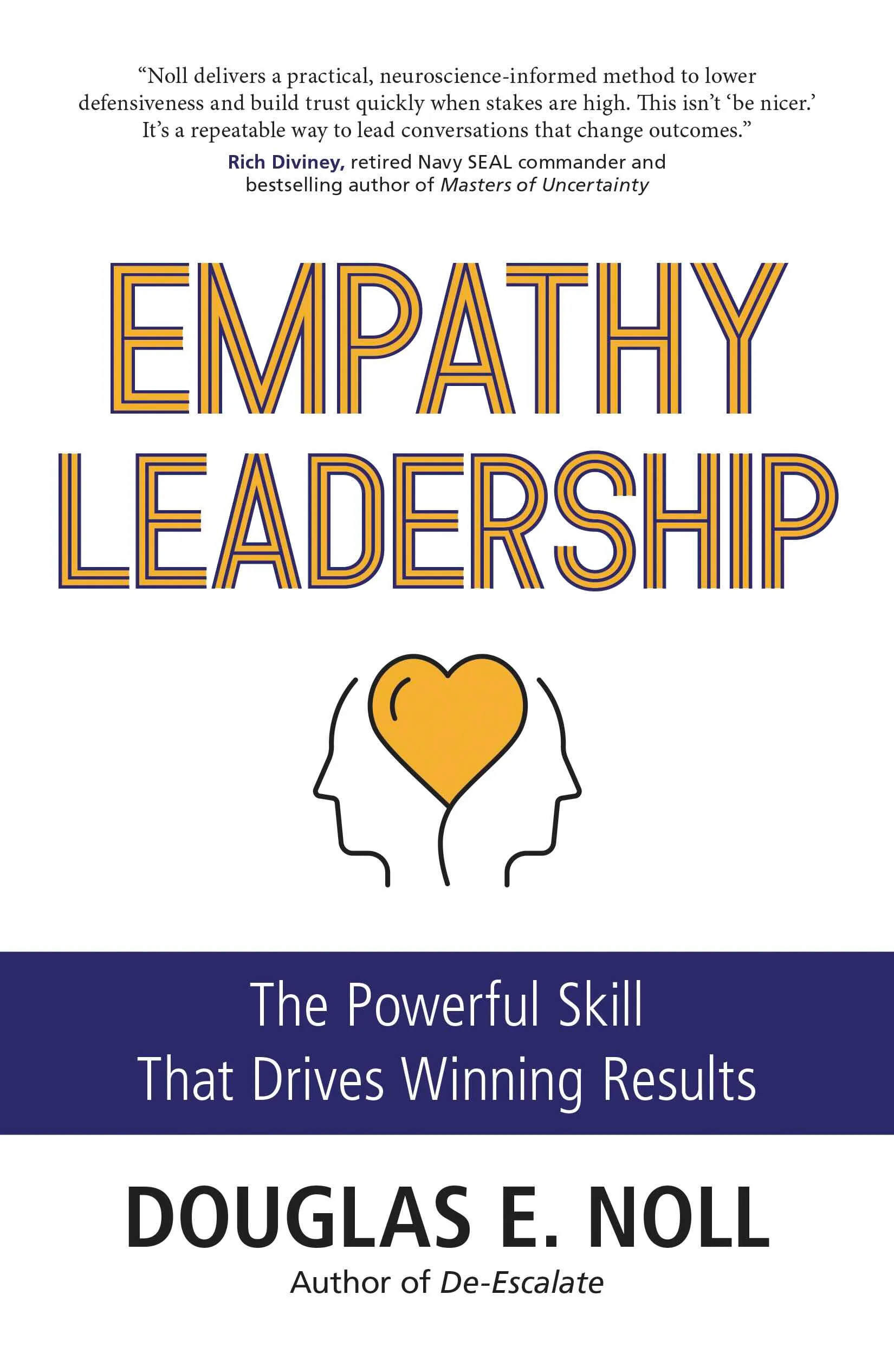
Empathy Leadership: The Powerful Skill That Drives Winning Results is out now. Order on Amazon, or if a 20-minute call would be more useful, Doug's calendar is here.
Emotional Competence Shapes Your Influence as a Leader
This 90-second emotional competence quiz will tell you how your emotions affect the way you are treated at work and how to gain the respect and influence you deserve as a leader.
Take the Free Assessment
Doug’s Books
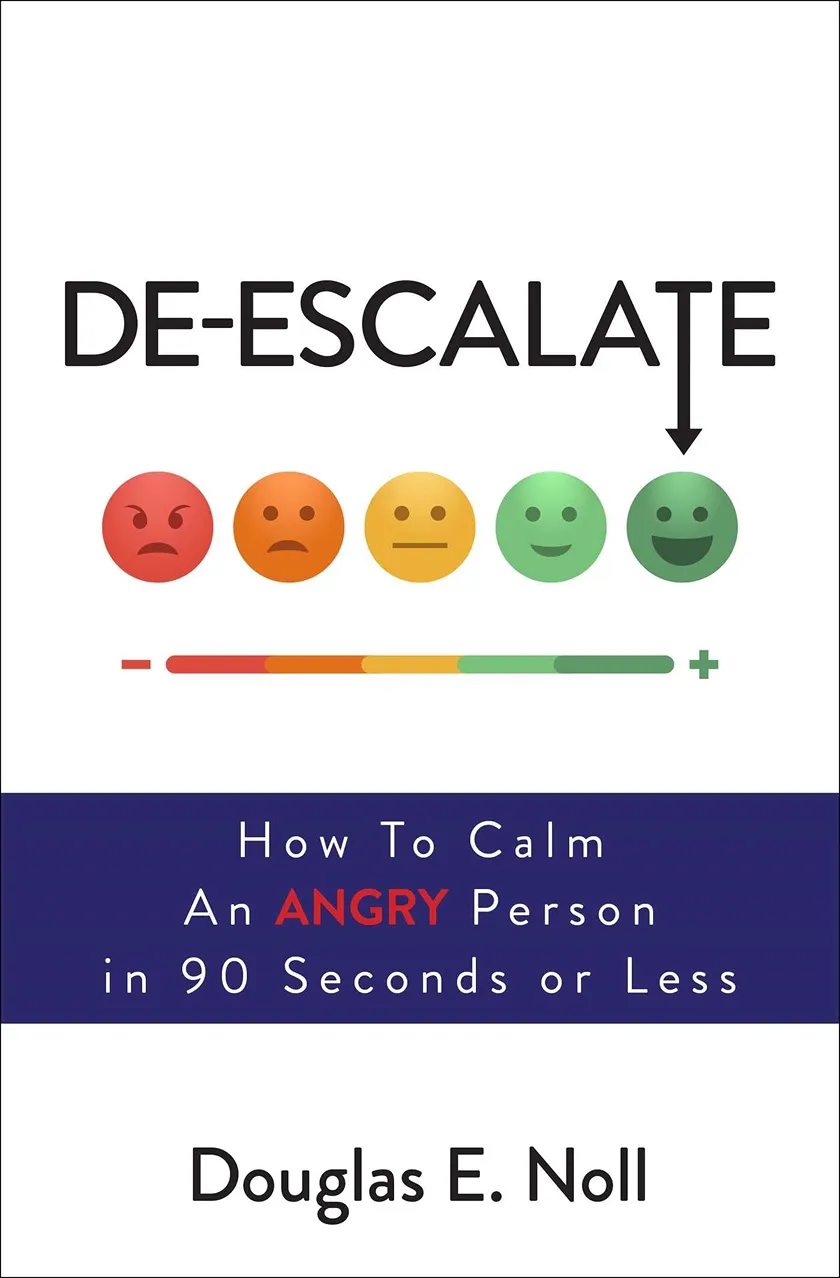
Doug has authored several books on affect labeling and emotional competency, including De-Escalate: How to Calm an Angry Person in 90 Seconds or Less, which won multiple awards and has been adopted by organizations worldwide.
More Blogs
View All